
Water Heater Dip Tube Replacement: When a Healthy Tank Acts Broken
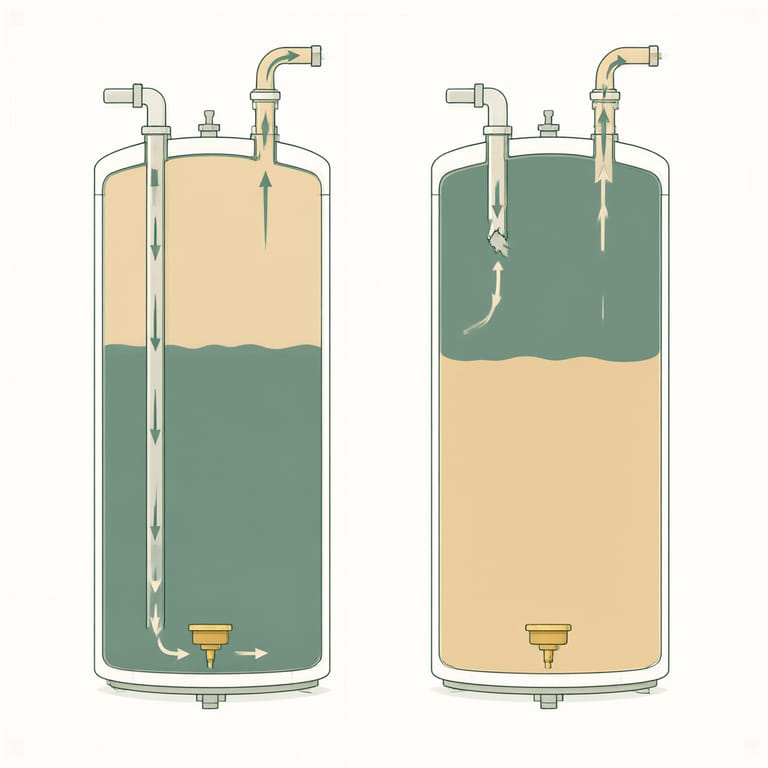
There is a water heater failure that passes every test and still leaves the shower cold after a few minutes. The culprit is usually the least famous part in the tank: the dip tube, a plastic pipe that carries cold inlet water from the top of the tank to the bottom. When it cracks or snaps off, cold water dumps straight into the hot layer at the top, and a sound appliance starts acting like a dying one. Water heater dip tube replacement is the fix: an inexpensive part, a single short visit, no wiring or burner work involved. Want it handled today? Call (800) 555-0184 and Embercrest connects you with a licensed, insured local installer who quotes before anyone opens the tank.
The symptom cluster that points at the dip tube
No single sign is conclusive; the combination is:
- Hot water fades fast. A fraction of the shower time you used to get from the same full-size tank.
- "Hot" tops out at lukewarm, especially while a tap is running, because the cold inlet stream short-circuits to the hot outlet instead of sinking to the bottom.
- White or translucent plastic flecks in faucet aerators and showerhead screens: fragments of the tube itself, the closest thing to a smoking gun.
- The heater tests healthy. Elements, thermostats, and burner all pass, yet the showers still fail. Look up at the cold inlet.
Two look-alikes to rule out first. An element or thermostat fault produces the same complaint; the no-hot-water diagnostic separates those in minutes. Heavy sediment also steals capacity, but it announces itself with popping and rumbling, and a tank flush settles that question cheaply.
A two-minute check before anyone opens the tank
Unscrew a bathroom faucet aerator and look at the screen. Mineral grit is ordinary sediment; curved plastic shavings, or flakes that float, are dip tube material. Time how long real heat lasts in the shower, too. Both checks are free and tell a pro exactly where to start, so mention them when you call.
Safety before the how-to
Three rules, in order. First, the tank holds scalding water: by the CPSC's burn tables, 140F water causes a third-degree burn in about 6 seconds, so the tank is cooled (or tempered through a hot tap) before anyone drains it. Second, if you smell gas near the heater, leave the building immediately, then call 911 and your gas utility from outside; do not flip switches, light flames, or use phones indoors. No repair comes before that. Third, on electric models the breaker stays off until the tank is refilled and purged of air: an element powered up dry fails fast, and any work on live 240V circuits is licensed-professional territory.
How water heater dip tube replacement is done
The job is refreshingly mechanical. From your side of the visit:
- Diagnosis. The installer confirms the aerator evidence and checks the elements or burner so nothing else gets blamed later.
- Quote. A price for the swap, plus a separate number if a flush or a seized fitting adds time, approved with the installer before work starts.
- Shutdown. Water off at the cold shutoff, power off at the breaker (or gas control to pilot), pressure relieved at a hot tap.
- Extraction. The cold inlet nipple comes off the top of the tank with the old tube hanging from it. Crumbled plastic gets fished out or flushed out; a full flush here is cheap insurance against plastic confetti in your fixtures.
- The new part. Modern replacements are tougher cross-linked polyethylene, often curved at the tip to stir the tank bottom and slow sediment. It drops in and the inlet is resealed.
- Verification. Refill, purge air at the taps, restore power or relight the pilot, then run a hot tap after recovery until it stays hot.
Ready to talk to a licensed water heater pro?
Call (800) 555-0184Free call. A licensed local water heater installer picks up.Licensed water heater partners in your area- Licensed and insured partner network
- 24/7 call routing
- Free call, no obligation
- You approve the price with the installer directly
Gas vs electric water heater dip tube replacement: what changes
Very little. By EIA household data, about 48 percent of US homes heat water with natural gas and about 46 percent with electricity, and both designs hang the same kind of tube from the same top-mounted cold inlet. Only the shutdown and restart differ: on a gas tank the control goes to pilot and is relit per the label afterward; on an electric tank the breaker goes off, the pro proves it dead at the element terminals (licensed work, not yours), and power returns only after the tank is full. Brand rarely matters: replacement kits are universal parts that fit most residential tanks, including big-box labels such as Whirlpool, trimmed to length by the installer.
What it costs, honestly
No national survey prices dip tubes as a separate line item, so be wary of oddly precise figures elsewhere. In time on site and parts cost, the job resembles the small-repair class that HomeGuide's 2026 data prices at $100-$350: element swaps, thermostat swaps, flushes. A dip tube swap sits in that band, toward the middle when a seized nipple or crumbled tube adds time. For scale, Angi's 2026 repair cost data put the average at about $600 across all water heater repairs, so this one sits at the friendly end. What moves the price: the age of the inlet fittings, a bundled flush, a spent anode rod found while the installer is working at the top of the tank, and after-hours timing.
Want a firm number instead of a band? Call (800) 555-0184; Embercrest connects you with a licensed local installer who quotes the fix, and you pay only for work you approve with them directly.
Fix the tube or retire the tank?
A dip tube is a young tank's repair: on a 4-year-old heater, pay for it without blinking. Past the industry's 8-12 year planning life (Angi's figure), the same money buys a part that may outlive the steel around it. A new tank runs $881-$1,826 installed in Angi's 2026 data (about $1,346 on average), and a tankless unit, which the Department of Energy credits with about a 20-year life expectancy, is the other comparison point. Our repair-vs-replace guide runs that math. Rule of thumb: under 8 years and not leaking, fix it; past 10 with a quote nearing half the cost of a new tank, bank the money.
Cost, downtime, and the DIY itch: straight answers
"Is the repair worth it?" On a tank with years left, yes: nothing else restores full capacity. On an old tank, say so on the call so the installer quotes the replacement too.
"How long am I without hot water?" A short visit plus the tank's recovery time, and the reheat is usually the longer wait. The mess is a partial drain into a floor drain or a hose, not a flooded room.
"Can I just do it myself?" Moderate-difficulty DIY with the power off and the gas on pilot; the catches are seized inlet nipples and crumbling plastic. Stop the moment a fitting will not budge: a cracked tank inlet turns a small repair into a full replacement.
Red flags that point past the dip tube
Call a pro promptly, and skip the DIY route, if the inlet fittings are visibly corroded, the tank body is weeping, the inlet fitting leaks or turns with the nipple instead of staying put, or there is no hot water at all rather than hot water that quits early (that points to an element, thermostat, or gas control, not the tube). Every related repair is indexed in the water heater repair hub. Or call (800) 555-0184 and let a licensed, insured local installer quote it straight.