
Permit for Water Heater Replacement: Almost Always Required, Even for a Same-Size Swap
The short version: nearly every US jurisdiction treats a permit for water heater replacement as mandatory, even when the new tank matches the old one in size and fuel and goes into the same closet. Building codes file water heaters under their plumbing and mechanical chapters, and a heater is a pressure vessel hooked to gas or a 240-volt circuit, precisely the kind of appliance permitting exists to watch. The fee is not a tax on hiring a pro; it pays for an inspector with no stake in the job to look over a device that can scald, burn, or (in one specific failure mode covered below) explode.
One caution before any paperwork. Gas piping, flue connections, 240-volt wiring, and the relief-valve discharge line belong to a licensed pro whether or not an inspector is ever scheduled. And if the air around the tank smells of gas, the filing drops to last place: walk everyone out of the building, then make the calls to 911 and the utility from the sidewalk instead of the utility room. Switches, flames, and phone screens stay untouched until you are through the door.
Which permit your replacement triggers
Rules are written locally, so read this as the map, not the statute. The job itself decides the class:
- Like-for-like swap, same fuel. Typically one plumbing or mechanical permit. Some jurisdictions offer a cheap, same-day minor water heater replacement permit aimed squarely at this swap.
- Gas unit, tank or tankless. Filing here buys an inspection of three things with carbon monoxide consequences: the fuel hookup, the vent run, and the combustion air supply. Of everything here, this is the one you least want to skip.
- Electric unit. The plumbing permit, and in some places a second, electrical permit whenever the circuit is new or altered. Heat pump models usually need that circuit plus a condensate drain, part of why Angi's 2026 data lands their installed cost at $3,200-$4,700.
- Fuel switch or tankless conversion. Plan on more than one permit (plumbing, then gas and/or electrical), since the systems feeding the heater are changing along with the heater itself. The same reason pushes tank-to-tankless conversions toward the top of Angi's $1,400-$3,900 tankless range.
- Emergency weekend replacement. Plenty of jurisdictions allow the swap to go in first with the paperwork filed the next business day; ask yours how long that grace window runs. "It was an emergency" postpones the filing, it never erases it.
- DIY replacement. Many building departments issue homeowner permits to owner-occupants: you turn the wrenches, an inspector still signs off. If that is your plan, read the DIY replacement guide before you pay the fee, not afterward.
Water heater replacement permit: does your jurisdiction require one?
That answer belongs to whichever office would send the inspector: the building or development services desk for your city or county. Its own site usually settles it. Open the permits or fee-schedule page, search for the words water heater, and the appliance is normally named outright next to its class and its price. If nothing turns up, one call to the counter closes the gap, and two questions cover it: is a like-for-like swap on their list, and will they issue to an owner-occupant? Write down the answer and the day you got it.
Three things push the answer toward "yes, and an inspection comes with it": the heater burns gas, it is moving to a spot it has never occupied, or the work reaches into the electrical panel. Hold fuel, location, and capacity exactly where they are, and in a jurisdiction that advertises an over-the-counter minor permit you are probably looking at the light version.
What the inspector actually looks at
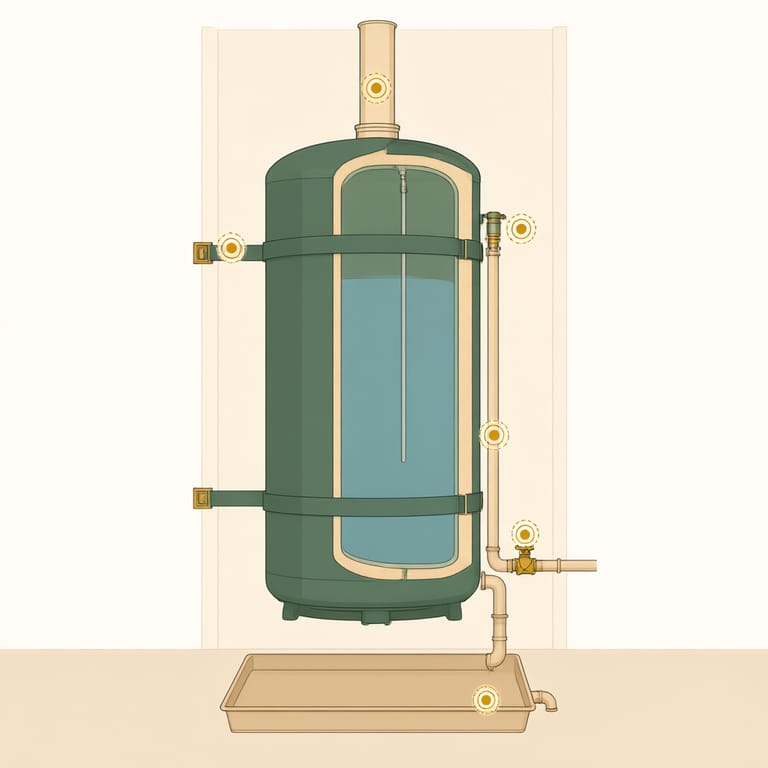
An inspection is a short tour of the places where a heater burns a house down or floods a floor, and the temperature-and-pressure relief (TPR) valve leads that tour. Under the International Residential Code (the P2804.6.1 family of rules), the discharge pipe leaving that valve has to hold the valve's full outlet diameter along its whole run, finish at an air gap somebody can actually watch, stay unconnected to any drain, and carry no cap, plug, or valve of its own, ever. The International Code Council traces real water heater explosions back to relief lines that were plugged: seal the only escape route and a runaway tank turns into a boiler. A dripping TPR valve is worth diagnosing; sealing it is the one answer that is never right.
The rest of the tour, briefly:
- Venting and combustion air, on anything that burns fuel: does the flue draw, are the clearances intact, is any exhaust drifting back into the room?
- Thermal expansion. On a closed supply, the inspector expects an expansion tank or a device that does the same job.
- Seismic strapping in the states whose code demands it, plus a pan and a drain line wherever a leak at that spot would wreck something underneath.
- The connections themselves: flexible connectors that carry a listing, a sediment trap (drip leg) on the gas line, and, on electric units, a disconnect the inspector can get to.
Every item there is easy for a rushed install to skip and hard for a homeowner to catch. Closing that gap is what the fee buys.
Ready to talk to a licensed water heater pro?
Call (800) 555-0184Free call. A licensed local water heater installer picks up.Licensed water heater partners in your area- Licensed and insured partner network
- 24/7 call routing
- Free call, no obligation
- You approve the price with the installer directly
Who pulls the permit, and what the fee buys
Every fee is set locally, published locally, and revised locally, so trust your own jurisdiction's schedule and distrust any page quoting one national figure. A few things do travel:
- When a pro does the job, the installer pulls the permit, and the fee lands as its own line on the written quote. An installer who volunteers to "save you the permit" is proposing that their shortcuts become your problem later. Read the offer as a warning, not a discount. What a complete quote should contain is laid out in the labor cost breakdown.
- Hold the numbers next to each other. Angi's 2026 data puts a standard tank at $881-$1,826 installed for most US homes and the typical job near $1,346, before the add-ons that usually follow: the fee, an expansion tank, venting corrections, haul-away. Of that group the fee is the small one, and the cost hub breaks the rest out by heater type.
- The visit itself is short, and on an install that already meets code it is close to a formality. Ask two things before signing: who meets the inspector, and who pays if something has to be put right.
If you skip it
The immediate consequence is none at all, which is precisely why the shortcut keeps getting taken. Unpermitted work waits, then surfaces on the worst possible day: during a sale, once the buyer's inspector writes it up and repairs get argued over against a closing date; inside an insurance claim after a leak or a fire, when the adjuster wants to know who did the install and under whose permit; or on a code-enforcement visit about something else that wanders past the utility closet. A storage tank is planned around an 8-12 year life (Angi's figure), room enough for the house to change owners with the same undocumented unit still in the closet. Unwinding it means reopening the work for inspection, correcting whatever no longer meets current code, and paying the original fee with a penalty on top. Set beside that afternoon, the fee somebody avoided was the smallest number in the project.
When to hand the whole question to a licensed pro
Turn the whole job over, filing included, when any of these fit:
- the work touches a gas connection or a vent at any point;
- the language around discharge piping, expansion tanks, or strapping means nothing to you;
- your jurisdiction reserves that class of work for licensed contractors;
- the heater sits in an attic or above finished space, where one mistake costs you a ceiling.
Call (800) 555-0184 and Embercrest points you to a licensed, insured installer nearby who puts the permit for water heater replacement on the quote and turns up for the inspection. Nothing is charged for that call, and no figure binds you until you agree it with the installer yourself. For the rest of the decision (equipment, budget, timing) begin with the guide to replacing your water heater.
Ready to talk to a licensed water heater pro?
Call (800) 555-0184Free call. A licensed local water heater installer picks up.Licensed water heater partners in your area- Licensed and insured partner network
- 24/7 call routing
- Free call, no obligation
- You approve the price with the installer directly